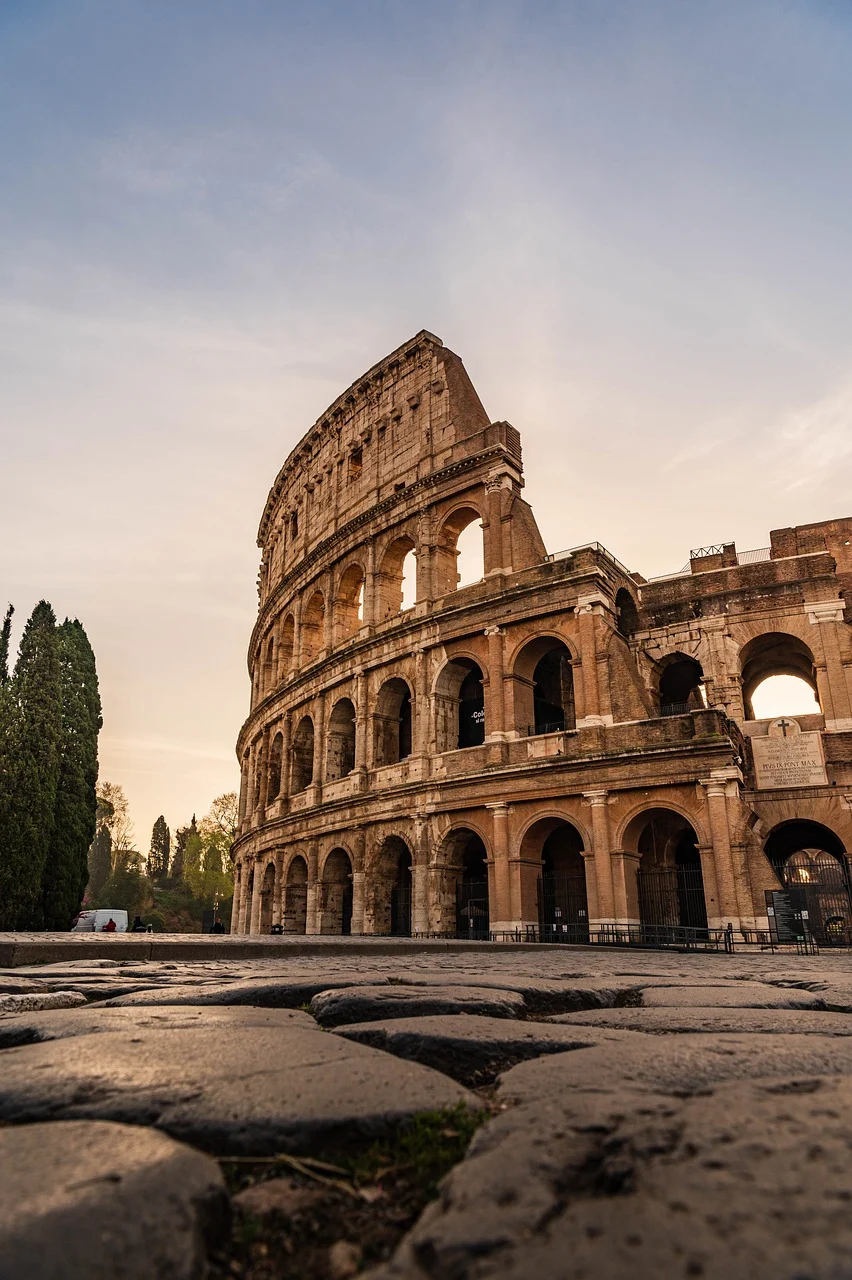
Is the Colosseum really Roman? A surprising truth that few people know
When it comes to Rome, the Colosseum is undoubtedly the most well-known symbol in the world. Millions of people visit it every year, fascinated by its grandeur and thousand-year history. But are we sure we really know everything about Italy's most iconic monument? Most people believe that the Colosseum was built by “Romans” in a generic sense, but the truth is much more accurate and, perhaps, even more fascinating: the Colosseum is Flavian, not simply Roman.
After the death of Emperor Nero, Rome experienced a period of great instability. Bringing order back was Vespasian, the first emperor of the Flavian dynasty, who came to power in 69 CE. In a highly symbolic gesture, he decided to erase the traces of his predecessor's excessive luxury and restore a space for the people to gather. Right where the artificial lake of the Domus Aurea, Nero's private imperial residence, stood, Vespasian ordered the construction of a large public amphitheater: the Amphitheatrum Flavium, known today throughout the world as the Colosseum.
The name “Colosseum,” interestingly, does not refer directly to the building, but to a colossal statue of Nero that stood nearby. Only in later centuries did the term begin to identify the entire structure, becoming synonymous with Ancient Rome itself.
Built between 70 and 80 CE, the amphitheater represented not only an extraordinary architectural work, but also a political act: a gift to the people and a powerful propaganda tool. Gladiatorial games, spectacles, and historical re-enactments, designed to celebrate the greatness of the Empire and the new Flavian order, were held here.
Today the Colosseum is a universal icon, but behind its stone lies a narrative of redemption, propaganda and change. It is a place that tells how history can be written - and carved - by those who were able to turn a crisis into an opportunity.
That's why, the next time you visit Rome, you can surprise your fellow travelers with a cultural treat: the Colosseum is yes Roman ... but it is also the monument-manifesto of the Flavians.
The Roman Colosseum is perhaps the most famous monument in the world. But are we sure we really know its origins?
The Roman Colosseum: 5 things you (may) not know about its origins
The Roman Colosseum, built in the Flavian era, is more of a symbol of imperial Rome than people think.
The Colosseum was inaugurated by Vespasian’s son Titus with 100 days of games and served more for imperial propaganda than popular entertainment.
And there’s more: the Colosseum’s real name is the Flavian Amphitheater, but everyone calls it that only because … next to it stood a giant statue of Nerone, known precisely as The Colossus.
🕵️♀️ In short: Roman yes, but also a little bit Sabine, a little bit Jewish … and a little bit forgotten in its true history.